 Skip to content

Top Padel Tips: Everything Beginners Need to Know
As the days get cooler and the evenings draw in, finding ways to stay active and get out from behind your desk becomes more important. While autumn weather can be unpredictable, a dry day is still a great opportunity to get outside and enjoy some fresh air.
Curious about padel but not quite sure where to start? You’re not alone. Padel has become one of the UK’s most talked-about racket sports, attracting everyone from experienced tennis players to complete beginners looking for a fun, sociable way to keep moving.
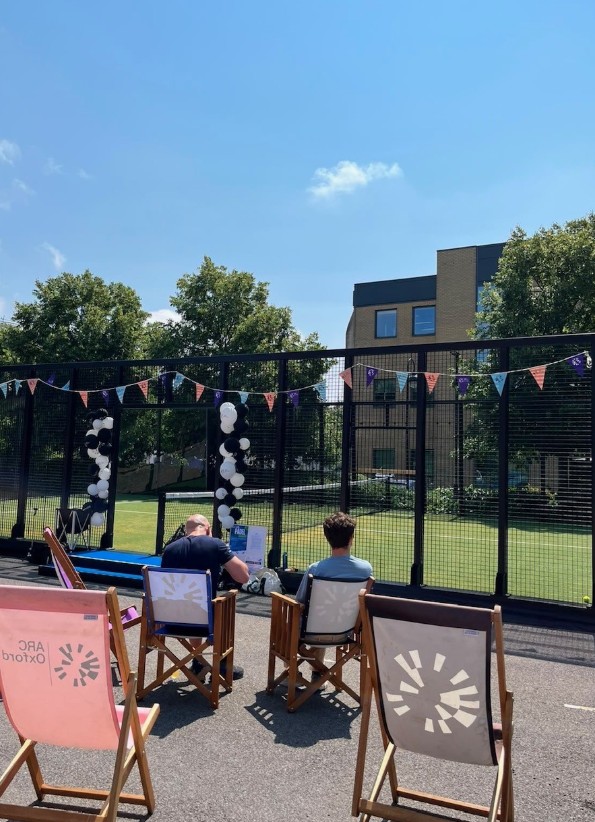
Fast-paced, social and surprisingly easy to pick up, padel is a great way to add some activity to your working day. At Adapt Oxford, our on-site padel court is free for all members to use. Whether you fancy a lunchtime match or an after-work game when the weather plays ball, it’s an opportunity to step away from your screen, catch up with colleagues and enjoy some competition!
Of course, there’s a learning curve, particularly when you discover that the walls are part of the game! So, whether you’re picking up a racket for the first time, looking for a new way to spend your lunch break or considering a workspace that offers more than just a desk, here’s everything you need to know about getting started with padel.

What Is Padel?
Padel is a racket sport that combines both elements of tennis and squash. It is generally played as doubles on an enclosed court, with the walls forming an important part of the playing area.
A standard padel court measures 20 metres long by 10 metres wide, around a third of the size of a tennis court, so it is significantly smaller. It is enclosed with walls and fencing, with a net running across the middle. The playing area, combined with the doubles format, enables you to spend plenty of time involved in the action rather than covering a huge amount of ground.
One of the things that makes padel particularly appealing to beginners is that you can start having rallies relatively quickly. Unlike tennis, where hitting the ball against the surrounding structure would usually mean the point is over, padel also allows the ball to rebound from the walls. Learning to anticipate those rebounds is one of the most enjoyable parts of the sport.
Padel vs Tennis: What’s the Difference?
If you’re familiar with tennis, you’ll recognise some of padel immediately. However, there are some key differences to keep in mind.
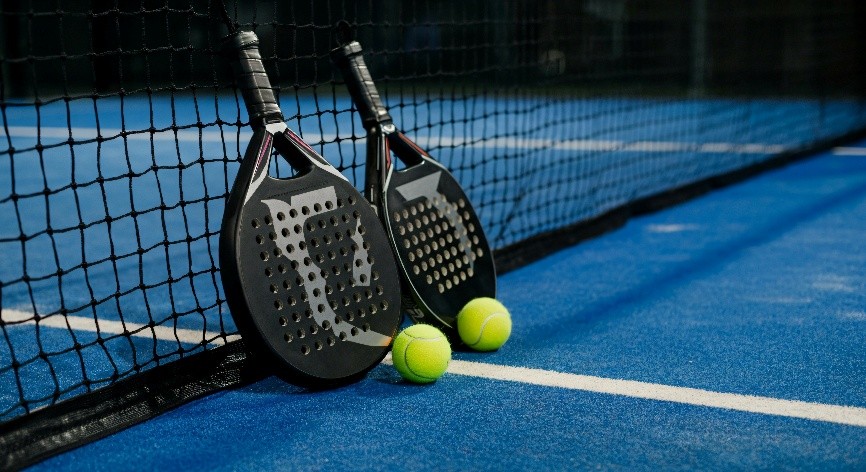
Padel is usually played as doubles in a smaller, enclosed court; there are walls that form part of the game, and an underarm serve is used. The sport also requires a solid, perforated racket rather than a strung tennis racket, and places a strong emphasis on positioning, control and teamwork.
The result is a game that can feel familiar while still being completely different once the rally gets going.
How Do You Play Padel?
The basic concept is simple: hit the ball over the net and into your opponents’ side of the court without letting them successfully return it. The ball can interact with the walls, meaning that rallies can continue in situations where a tennis player might expect the point to have ended.
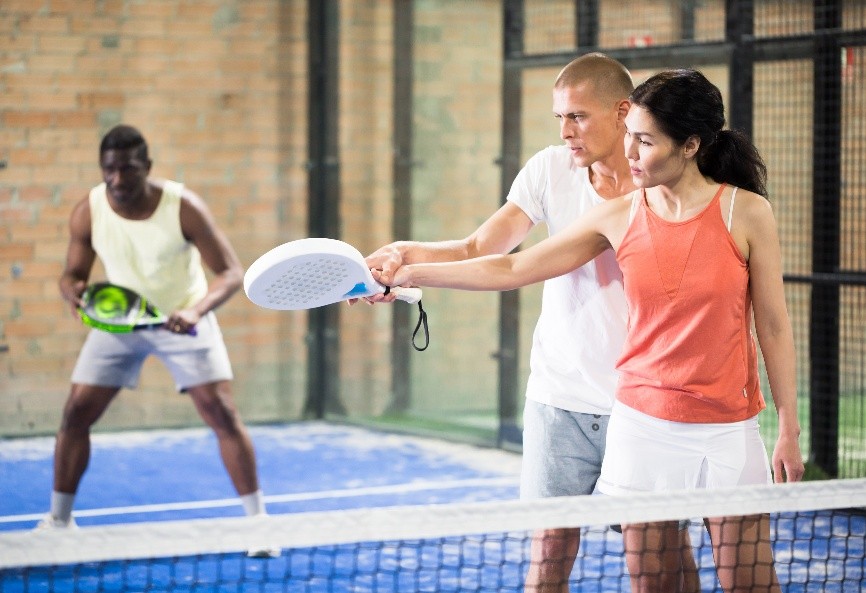
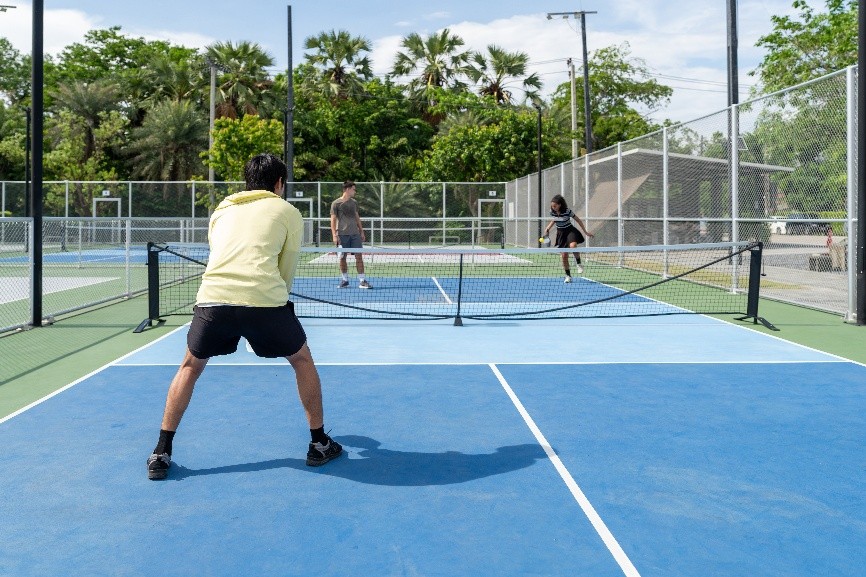
The game is predominantly a doubles sport, with four people on court; two on each side, making the sport highly social. It can be a great way to introduce a little friendly competition into your day, whether you’re playing with friends, colleagues or other members of the community.
If you’ve played tennis, the scoring system will feel familiar. Games use scores of 15, 30 and 40 before reaching game point, while matches are typically structured into sets. However, for beginners, your first few games are much more about getting comfortable with the racket, ball and court. The scoring will quickly become second nature.
How to Play Padel: The Basic Rules
Unlike tennis, padel uses an underarm serve. The ball is bounced before being struck, and the serve is played diagonally into the opponent’s service box, making serving feel much more approachable for beginners than traditional tennis serves.
You’ll need to keep an eye on what happens after the ball bounces and interacts with the walls. Don’t automatically rush towards the ball; let it come towards you. Watch the speed and angle of the ball, anticipate the rebound and give yourself enough space to make a controlled return.
As the game is played on a relatively compact court, your positioning is key. If you and your partner both chase the same shot, you will leave a notable gap behind you. Instead, try to move together, and think of yourselves as a pair rather than two individual players.
What Equipment Do You Need?
- A Padel Racket: Rather than having strings, a padel racket has a solid hitting surface with holes through it that are smaller and designed specifically for the demands of the sport.
- A Padel Ball: Padel balls are designed with the sport’s playing characteristics in mind.
- Comfortable sportswear and suitable court shoes: You’ll be moving, changing direction and occasionally scrambling after a difficult shot, so footwear with appropriate grip and support is key.
10 Top Padel Tips for Beginners
These are the principles worth remembering when you first step onto a padel court.
1. Don’t Try to Hit Everything Hard
It’s tempting. You’ll see an opening, wind up and absolutely launch the ball. Sometimes that works, but often, it ends with the ball disappearing over the back of the court. Concentrate on keeping the ball in play, finding space and making your opponent’s move.
2. Use the Walls
The walls are one of your biggest tactical advantages. Practise allowing the ball to rebound and get comfortable judging where it will travel. Once you can confidently use the walls, you’ll have far more options during a rally.
3. Move With Your Partner
You don’t need to move perfectly in sync but be aware of your position relative to your partner.
4. Get Comfortable at the Net
The net can be a great attacking position, but don’t sprint forwards simply because the ball has gone over the net. Learn to recognise when you and your partner can move forwards together and when it’s better to stay back.
5. Focus on Placement
A well-placed shot that forces your opponent into an awkward position can be far more effective than a powerful shot.
6. Keep Your Early Shots Simple
Start with forehands, backhands, volleys, serves, returns, lobs and wall rebounds. Once those become comfortable, you can experiment with more advanced shots.
7. Learn the Lob
The lob can push opponents away from the net, give you and your partner time to reposition and change the rhythm of a rally.
8. Talk to Your Partner
Communication is essential. A simple “mine”, “yours” or “leave” can prevent both players from charging towards the same ball. It also helps you understand where your partner is on court.
9. Watch the Ball After It Bounces
Pay attention to its speed, its height, its direction, how it interacts with the wall and where it is likely to end up. The sooner you start reading the ball, the more time you’ll have to prepare your next shot.
10. Don’t Worry About Making Mistakes
Padel is supposed to be fun. The quickest way to improve is to keep playing, experiment with different shots and learn from what happens!

Common Padel Mistakes Beginners Make
Every new player makes mistakes, but knowing what to look out for can help you avoid some of the most frustrating ones.
Going for winners too early: Build the rally, move your opponents, wait for an opportunity, then attack.
Trying to play padel like tennis: Tennis experience can be useful, but padel’s smaller court, walls and underarm serve require a different approach.
Chasing the ball: Good doubles play is about covering the court together.
Standing too far apart: Stay connected and move as a pair.
Forgetting about the walls: If you’re constantly trying to hit the ball before it reaches the wall, you’re making the game harder than it needs to be.
How to Improve at Padel
Play regularly and practice the basics: The more you play, the more naturally you’ll improve
Play with different people: Each game gives you something new to learn!
Consider coaching: Coaching can help you understand technique, positioning and tactics rather than simply learning through trial and error.
Watch better players: Watching experienced players can teach you a surprising amount about positioning and movement.
Ready to Give Padel a Try?

As autumn settles in, it’s easy for the working week to become a succession of emails, meetings, calls and screen time. Making space to move and connect with other people can be a welcome change of pace. And when the weather stays dry, our on-site padel court offers just that.
Gather three colleagues or fellow members, grab your rackets and enjoy an hour away from your desk. It’s a simple way to make the most of a lunchtime break or round off the working day on a high.
With private offices, flexible coworking, professional meeting rooms, cafés, community events, wellbeing facilities and a complimentary on-site padel court, we offer a workspace designed to support more than just your working day.
So, whether you’re a complete beginner keen to try a new sport or a business looking for a workspace that offers something beyond four walls and a desk, why not make the most of a dry autumn day and give padel a go?