 Skip to content

The Impact of Commutes on Employee Productivity
For many years, commuting has long been accepted as part of the traditional work routine. Employees travelled into city centres each morning, often spending hours on crowded trains, delayed buses, or in heavy traffic before their workday had even begun.
Today, hybrid working is changing how organisations view productivity, employee wellbeing, and workplace performance. Businesses are increasingly recognising that long commutes do more than create inconvenience; they can reduce focus, impact morale, contribute to stress and fatigue, and ultimately affect job satisfaction and staff retention.
As a result, flexible working models and coworking spaces are becoming practical alternatives, enabling employees to work more effectively while avoiding the strain of lengthy daily travel.
At Adapt, we seek to support professionals in embracing a more balanced way of working by offering flexible coworking environments at our innovative research park in Oxford. Our approach reflects a wider shift toward employee-centric workspaces that prioritise wellbeing alongside performance.

The Modern Commute Is Changing
Since the pandemic, employees who once commuted five days per week have suddenly experienced the benefits of flexible work, including reduced travel time, improved work-life balance, and greater control over their schedules.
As a result, many employees no longer view long daily journeys as necessary or sustainable. Instead, workers increasingly prefer hybrid arrangements that combine remote work, coworking spaces, and occasional office collaboration.
Research published in Nature found that hybrid working improves employee retention without negatively affecting performance, reinforcing the idea that productivity does not depend on constant office attendance.
This shift has also encouraged businesses to reconsider the role of the office. Rather than serving as a place employees must attend every day, offices are increasingly becoming hubs for collaboration, meetings, and team interaction.

The Link Between Commutes and Employee Wellbeing
Employee wellbeing and productivity are closely linked. When workers are healthier, less stressed, and better rested, they are more likely to remain engaged, motivated, and productive throughout the day.
Research from WorkL explored the relationship between commuting and employee happiness, finding that longer commutes are strongly associated with lower wellbeing. Employees with shorter journeys generally report higher levels of satisfaction and improved mental health. For those living close to our research park in Oxford, Adapt is a fantastic place to meet like-minded individuals and thrive. A large-scale study covered by The Guardian also found that hybrid employees reported feeling less stressed, healthier, and more productive due in part to reduced commuting demands. Many participants also reported improved sleep quality and better work-life balance.
These improvements in wellbeing often translate directly into stronger workplace performance. Employees who are less exhausted and emotionally drained are more likely to contribute positively to teams, maintain focus, and remain motivated
Why Hybrid Working Often Improves Performance
The widely discussed study published in Nature examined over 1,600 workers and found that hybrid workers maintained productivity levels, and employees with longer commutes benefited particularly strongly from flexible arrangements.
Employees will often perform better when they have greater autonomy over how and where they work. Reduced commuting time also allows workers to begin their day with more energy and less stress, which can improve both efficiency and concentration.
However, fully remote working is not always the ideal solution for every business or employee. While remote work eliminates commuting entirely, some workers struggle with isolation, distractions at home, or reduced opportunities for collaboration. This is why hybrid workspaces and coworking environments like Adapt are becoming increasingly important. We provide the flexibility employees value while still offering the structure, social interaction, and professional environment many workers need to remain productive.
How Flexible Coworking Spaces Help Reduce Commuting Stress
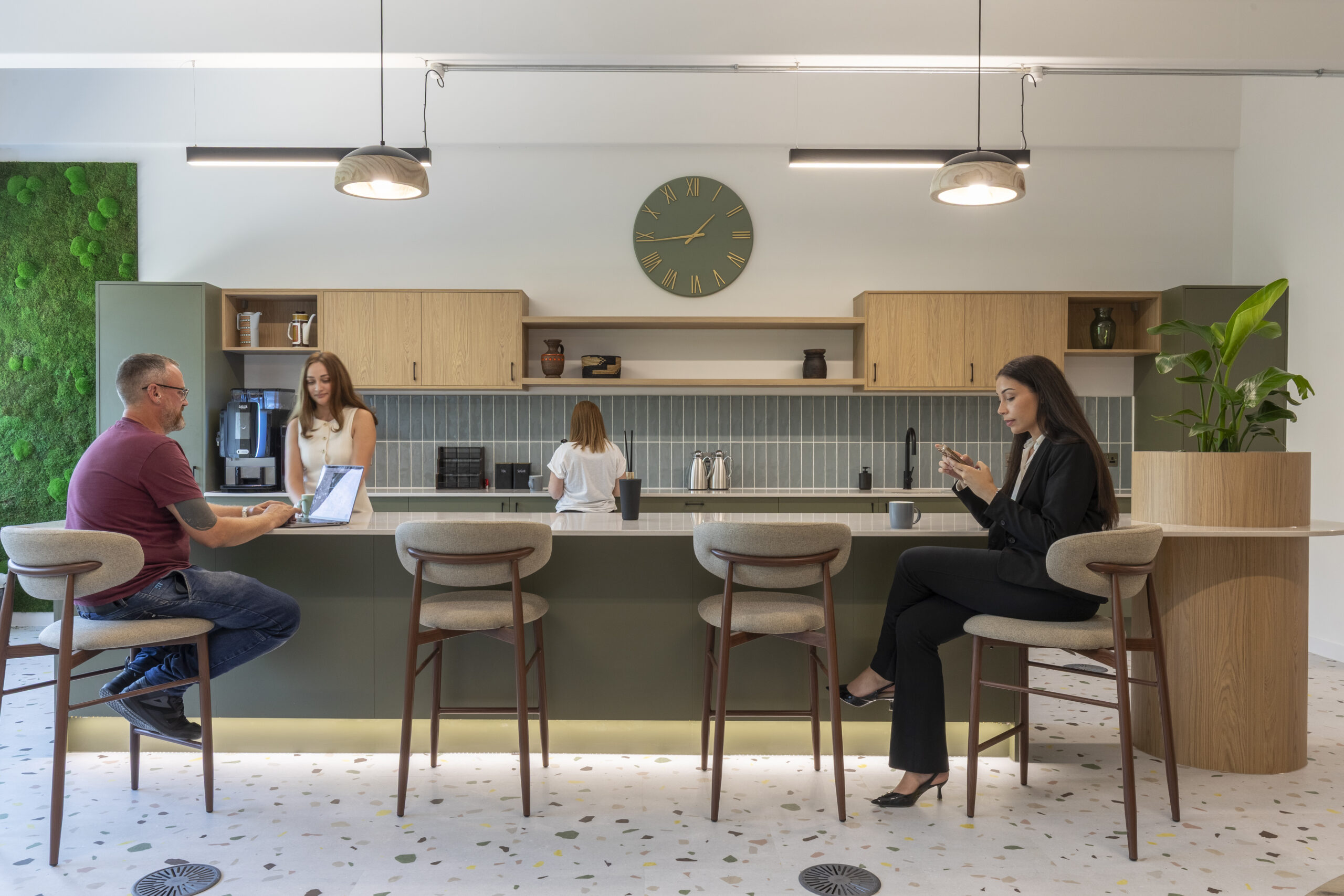
Flexible coworking spaces offer an effective middle ground between working from home and travelling daily into crowded city centres.
At Adapt, we highlight this advantage through our facilities in Oxford, which provide professionals with access to collaborative workspaces. Flexible coworking environments also help employees establish clearer boundaries between home and work. For many professionals, working entirely from home can blur personal and professional responsibilities, making it harder to switch off mentally at the end of the day.
Our private offices, coworking spaces and meeting rooms all create a professional atmosphere designed for focus and collaboration. Amenities such as our quiet work areas, alongside our networking opportunities, further support.
Commute-related stress has become a major business issue affecting recruitment, retention, and organisational performance.
Today’s workforce increasingly prioritises flexibility when evaluating job opportunities. Research consistently shows that long commutes contribute to higher turnover rates, especially among highly skilled employees. Businesses that fail to adjust risk losing talent to competitors offering more flexible arrangements.
There are environmental benefits as well. Fewer daily commutes help reduce traffic congestion, lower emissions, and support broader sustainability goals. For businesses focused on ESG initiatives, flexible work arrangements can form part of a more environmentally conscious workplace strategy.

The Future of Productivity Is Flexible
The relationship between commuting and productivity is becoming increasingly clear. Long, stressful journeys negatively affect focus, wellbeing, and employee satisfaction, while flexible working models often improve morale and performance.
This does not necessarily mean the office is disappearing. Instead, workplaces are evolving into more adaptive environments that support collaboration, flexibility, and employee wellbeing simultaneously.
Hybrid work, coworking spaces, and local flexible offices are likely to remain central to the future of work. Employees want the freedom to work productively without sacrificing hours each day to stressful travel. Businesses that recognise this shift will be better positioned to attract talent, improve retention, and create healthier, more productive teams.
As companies continue rethinking how work should function, flexible workspace providers like Adapt are helping shape a more balanced approach to productivity, one where employees can thrive professionally without the burden of unnecessary commuting.